


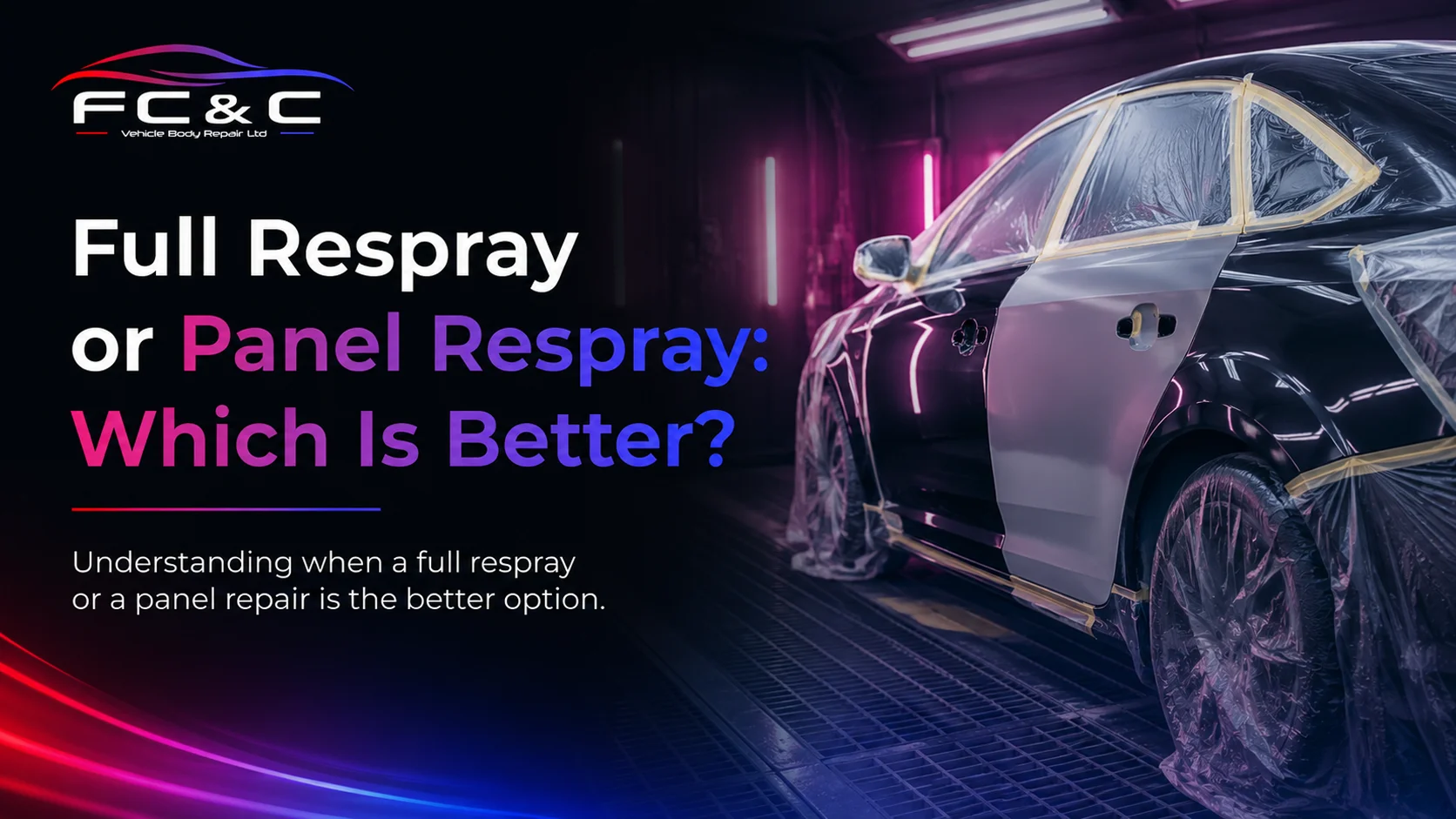
If your car has damaged, scratched or faded paintwork, one of the first questions is whether the affected area can be repainted on its own or whether a full respray would give a better result. The answer depends on much more than the size of the visible damage. The condition of the surrounding paint, the age of the vehicle, previous repairs and the finish you want to achieve all need to be taken into account.
In many cases, repainting a single panel is all that is required. A full car respray becomes more relevant when problems affect several areas of the vehicle, the existing paint has deteriorated significantly or you want to change the colour completely. Neither option is automatically better. The right choice is the one that suits the actual condition of the car.
What is a panel respray?
A panel respray means refinishing one specific part of the vehicle rather than repainting the entire exterior. This could be a bumper, door, bonnet, wing, quarter panel or boot lid. It is commonly used after scratches, dents, minor accident damage or repairs where the original paint has been broken.
If a car is generally in good condition and one door has been deeply scratched, there is usually little reason to repaint every other panel. The damaged area can be repaired, prepared and refinished while leaving the rest of the original paintwork untouched.
The challenge is making the repaired section look as though it has always belonged to the car. That is why the quality of preparation and colour matching matters just as much as the paint itself.
Why can matching car paint be difficult?
The manufacturer’s paint code provides an important starting point, but it does not always tell the entire story. Two vehicles that originally left the factory in exactly the same colour can look slightly different after several years on the road.
Sunlight, weather, polishing, previous repairs and general ageing can all influence the appearance of the paint. Metallic and pearl finishes can be even more demanding because the way the paint reflects light depends partly on how its particles sit within the finish.
A professional body shop therefore looks at the colour that is actually on the vehicle rather than relying only on the original code. Depending on the location of the repair and the colour involved, blending into neighbouring areas may also be used to create a smooth visual transition.
When does a full respray make more sense?
A full respray becomes worth considering when paint problems are no longer limited to one isolated panel. A vehicle may have fading across several areas, peeling clear coat, numerous scratches or previous repairs that have left different panels noticeably mismatched.
It can also make sense as part of a restoration, particularly when the aim is to bring the exterior back to a consistent condition rather than repair one problem at a time.
Another obvious reason for a full respray is a colour change. Repainting a car in a different colour is a much larger job than refreshing the existing finish. The amount of work required also depends on how complete the colour change needs to be. Painting the visible exterior surfaces is very different from changing the colour inside door shuts and other areas that become visible when the doors, bonnet or boot are opened.
Preparation is a major part of any respray
A high-quality respray starts long before the colour is applied. New paint follows the surface underneath it, which means dents, deep scratches, corrosion and poor previous repairs need to be addressed first.
Simply applying fresh paint over damaged or poorly prepared bodywork will not make those problems disappear. In fact, a new glossy finish can make imperfections more noticeable.
This is why two apparently similar respray jobs can require very different amounts of work. One vehicle may need relatively straightforward preparation, while another may reveal dents, old filler, corrosion or previous paintwork that needs to be corrected before refinishing can begin.
Is a full respray better than painting individual panels?
Not necessarily. If only one or two panels are damaged and the rest of the vehicle is in good condition, a panel respray will normally be the more sensible approach. It allows the repair to focus on the area that actually needs attention without creating unnecessary additional work.
A full respray becomes more attractive when paint problems are widespread or when repairing individual sections one after another would still leave an inconsistent overall finish.
The decision is therefore less about choosing the “better” type of respray and more about understanding what result you are trying to achieve. A localised repair can be perfect for one vehicle, while another car may benefit from refinishing the entire exterior.
Car respray in Bristol
If you are unsure whether your vehicle needs a panel respray or a complete repaint, it is worth having the paintwork assessed before deciding.
At FC&C Body Repair in Bristol, we can inspect the damaged areas as well as the condition of the surrounding paintwork and explain what level of repair is appropriate. Whether the problem is a damaged bumper, scratched door, several panels requiring attention or a complete colour change, the starting point should be the condition of the car rather than automatically choosing the largest repair.