

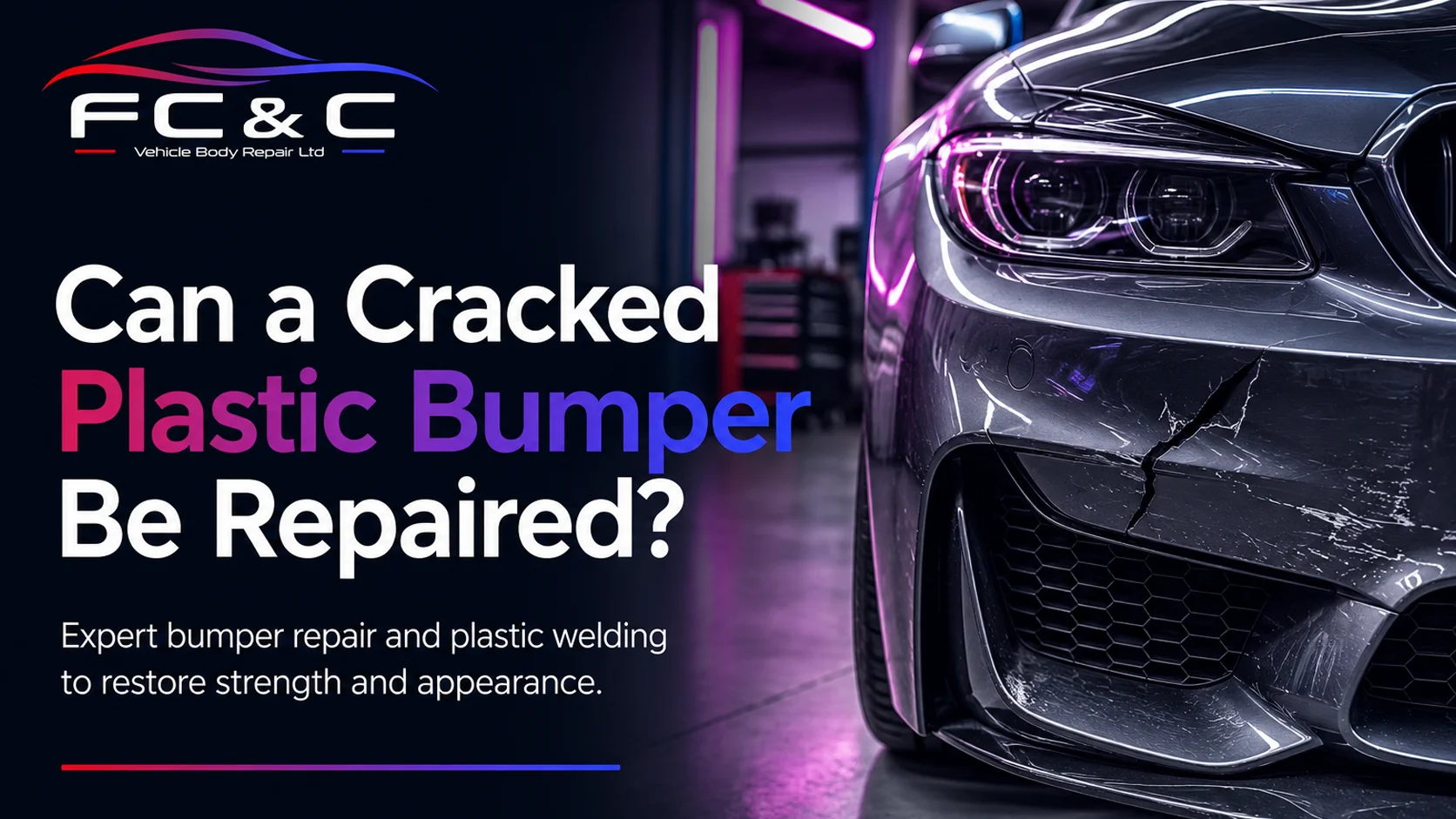
A crack in a plastic bumper can look worse than it actually is. Even a clearly visible split does not necessarily mean that the entire bumper has to be replaced. Many types of plastic bumper damage can be repaired using professional techniques, including plastic welding, surface reconstruction and refinishing.
Whether repair is the right solution depends on where the bumper has cracked, how much of the material has been damaged and whether the impact has affected mounting points or parts hidden behind the bumper. A small crack in the centre of the bumper is a very different situation from major damage around its mounting points.
Why do plastic bumpers crack?
Plastic bumpers are designed to cope with everyday use and relatively minor contact, but there is a limit to how much they can flex. Low-speed collisions, parking accidents and contact with posts, walls or other vehicles can all cause the plastic to split.
Sometimes the damage is obvious immediately. In other cases, a small crack appears first and gradually becomes larger as the bumper moves during normal use. Previous repairs can also affect the condition of the material, especially if the damaged area was only cosmetically covered rather than repaired properly.
The size of the crack is therefore only one part of the assessment. Its location and the condition of the surrounding material are just as important.
How is a cracked bumper repaired?
Before any repair begins, the damaged area needs to be inspected properly. The technician will look at the crack itself, check whether the bumper has become distorted and assess the condition of the surrounding plastic and mounting areas.
If the bumper is suitable for repair, the damaged section can be prepared for plastic welding. The aim is to reconnect and rebuild the plastic rather than simply cover the visible line on the surface. Depending on the damage, additional reinforcement may be needed.
Once the plastic repair has been completed, the surface is prepared so that the repaired area blends naturally with the rest of the bumper. Primer, colour and clear coat can then be applied where required.
This is why bumper repair is more involved than simply filling a crack and painting over it. The structural damage to the plastic needs to be dealt with before the cosmetic finish is restored.
Can damaged bumper mounts be repaired?
Sometimes they can. Plastic tabs and mounting areas can be repairable depending on their design and how badly they have been damaged.
These areas are important because they keep the bumper correctly positioned against the rest of the vehicle. If the bumper is hanging loose, has moved away from a wing or no longer aligns properly with a light, there may be damage around the mounting points that is not obvious from looking at the crack alone.
This is also why an inspection can be useful after a stronger impact. The bumper cover may be the most visible damaged part, but brackets and components underneath it can also be affected.
What about sensors and cameras in the bumper?
Modern bumpers are increasingly used as mounting locations for parking sensors, cameras and components associated with driver assistance systems. If an impact occurs close to one of these areas, repairing the plastic may not be the only work required.
The condition of the equipment and its mounting position may also need to be checked. A bumper that appears to have suffered mainly cosmetic damage can therefore require more attention on a modern vehicle than it would on an older car without these systems.
Does every cracked bumper need repainting?
If a crack passes through a painted section of the bumper, refinishing will normally form part of the repair. Once the damaged plastic has been restored, the surface needs to be prepared so that the repaired section is no longer visible.
Very light scuffs and superficial marks are different. Depending on their depth, some may be improved without a full paint repair. A crack through the bumper material, however, needs to be dealt with at the level of the plastic rather than treated only as a paint problem.
Not sure whether repair is worth it in your case? Read our guide: Cracked Bumper: Repair or Replace?
Plastic bumper repair in Bristol
If your bumper is cracked, split or damaged after an impact, you do not need to decide in advance whether it should be repaired or replaced.
FC&C Body Repair in Bristol can inspect the damaged bumper and assess the condition of the surrounding area. Send us clear photographs for an initial assessment or bring the vehicle to the workshop so we can determine whether plastic repair is suitable and explain the available options.
Call 07757 653888 or send us a message.
Check out our offer